
-
Arijeet Rege
-
Arijeet Rege
-
Arijeet Rege
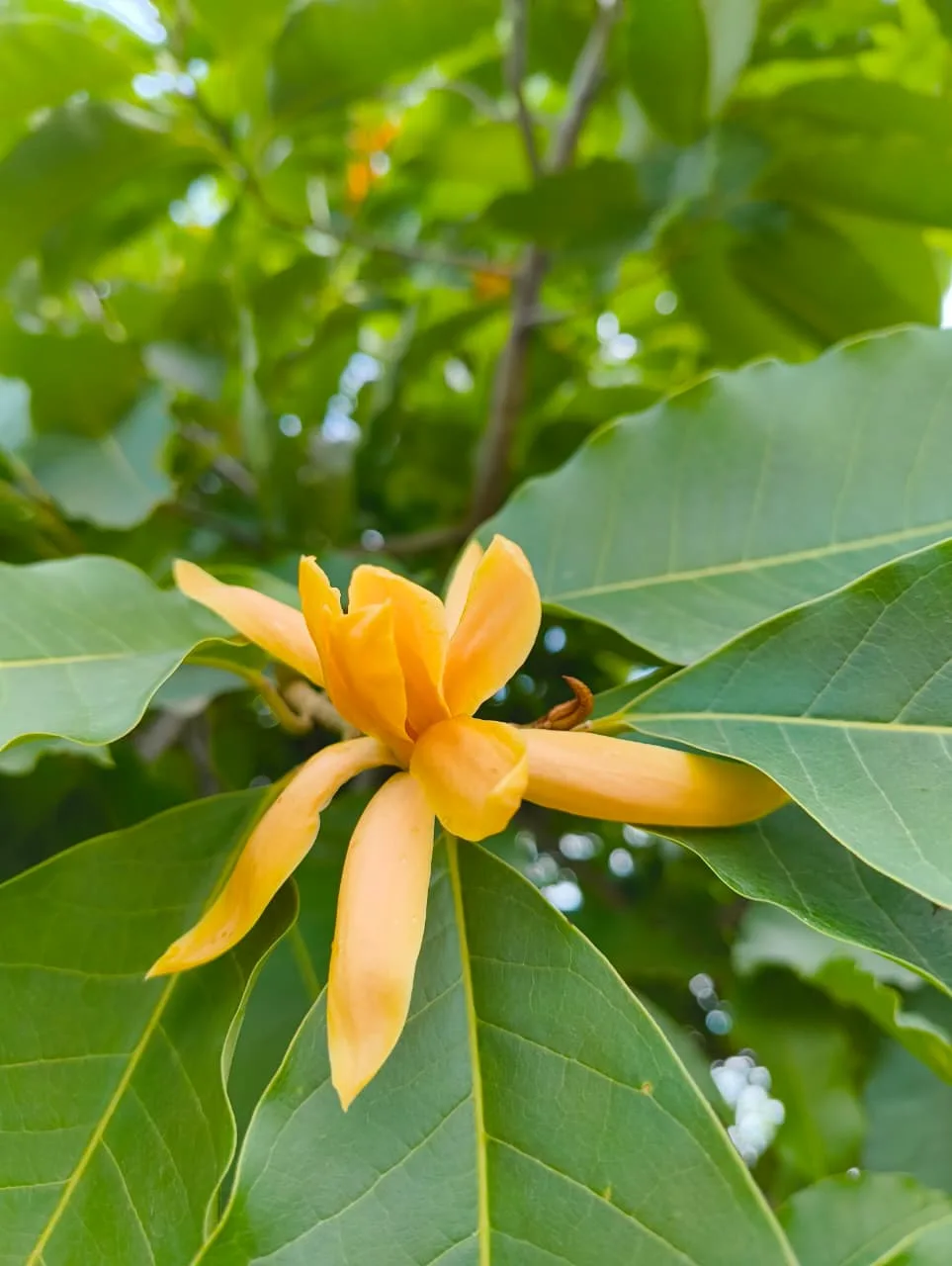
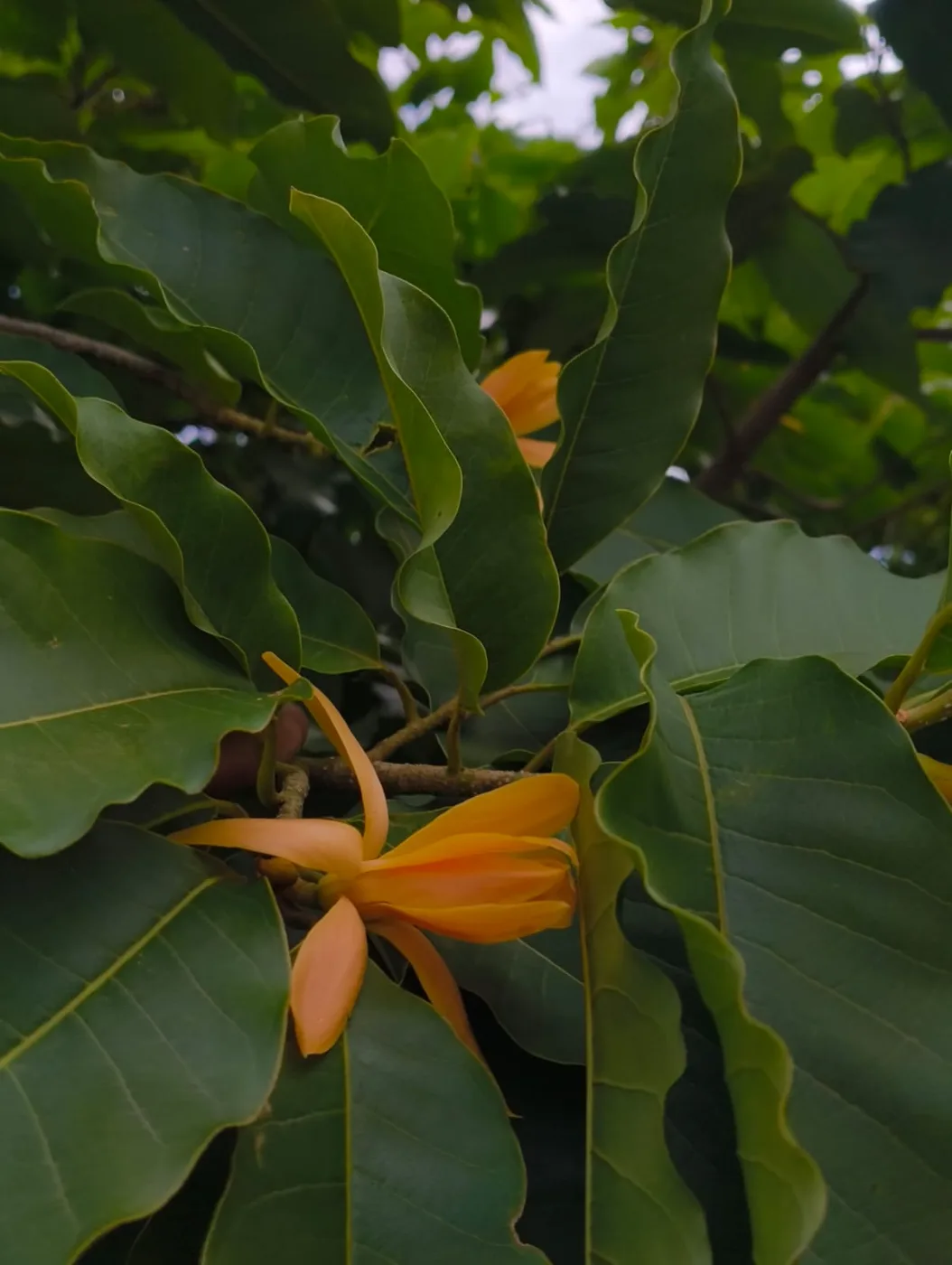
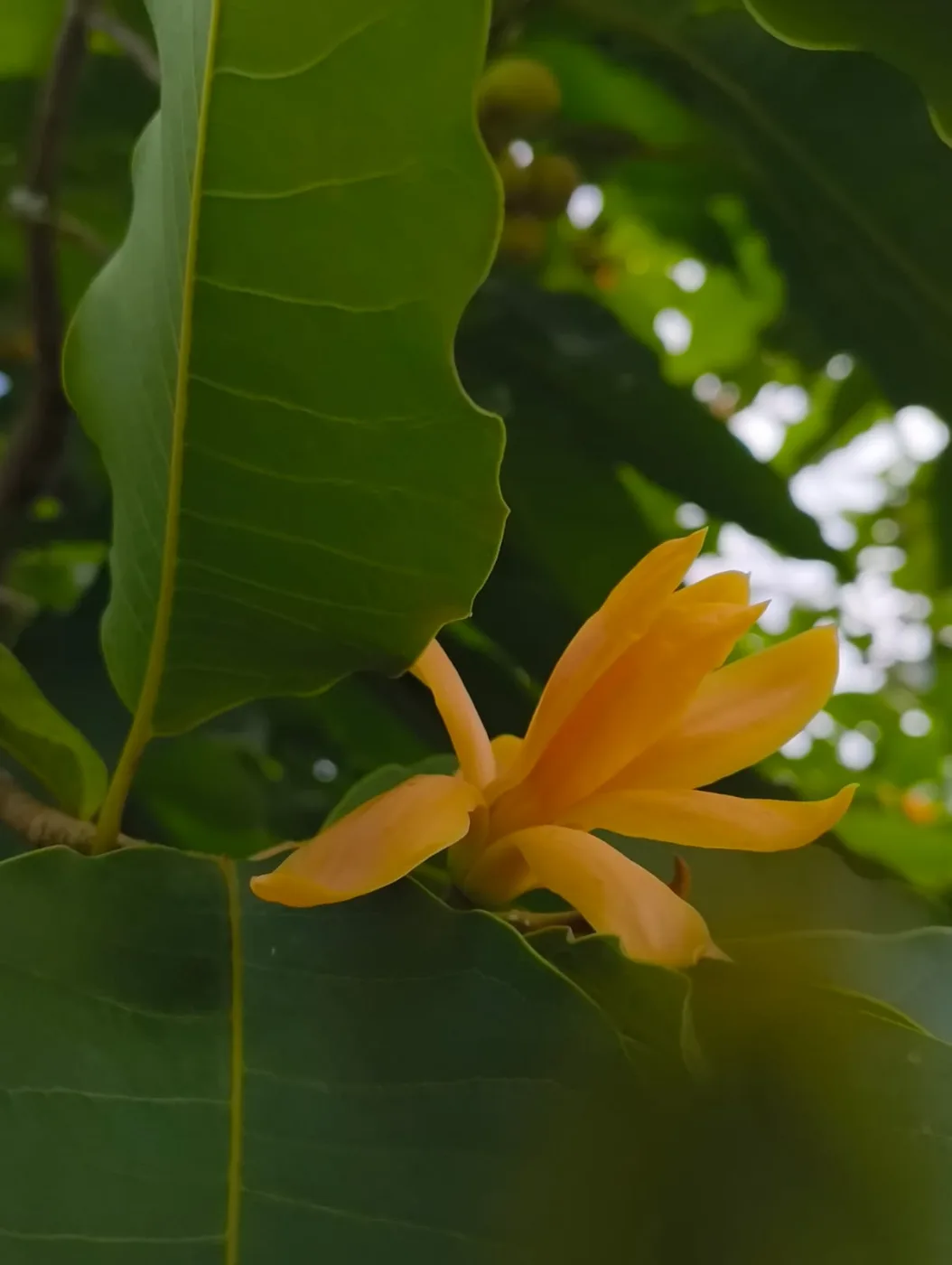
ચંપા
Magnolia champaca
चम्पा
Native Naturalised
Commonly known as Yellow Jade Orchid Tree, Joy Perfume Tree.
Seed or sapling availableThe fragrant flowers attract butterflies and hummingbirds.
The red seeds are eaten by Grey-headed and Jungle Mynas, Chestnut-tailed Starlings, bats and ants.
The leaves feed Common Jay caterpillars.
- Seeds should be sown within two weeks of ripening, and air-layered or grafted trees flower sooner than seed-grown ones.
- Poor germination is blamed on a hard seed coat, short-lived seed and the fleshy red outer layer.
- Softening or even removing the seed coat has not fixed it.
- Buying a grafted sapling is the easier route.
- Plant it in full sun with well-drained soil, and give it a wide berth.
- One source suggests a spread of about 50 feet.
Champaka appears in the Ramayana, in Tagore’s songs and in the Bengali folk tale Saat Bhai Champa.
Tibetan belief holds that the Buddha of the next era will find enlightenment under a white champaca.
Champa is also commonly mistaken for Plumeria, which is sold under the same name but belongs to an entirely different family.
- Flowers are used for essential oil and perfume, including the famous “Joy”.
- They are also worn in hair, used for worship and floated in bowls of water to scent a room.
- Timber is light and durable, used for furniture, door panels, cabinets and carved bead chains.
- It resembles teak, and over-harvesting has made the tree scarce in parts of the wild.
- In Ayurveda, a bitter bark infusion is taken for fever and leaf tea for cough and tonsillitis.
- Roots and leaves are used for urinary incontinence, stomachache, eye problems and fever.
These uses are documented for information only and are not medical advice. Always verify the species and the plant part before use.
E. Asia - China, India, Bangladesh, Myanmar, Thailand, Vietnam, Indonesia.